
A single spin on the Crazy Time wheel can pay out thousands of times your stake - and the very next spin can land on a number that pays even money. That gap between the ordinary and the extraordinary is precisely what makes this live casino game so compelling, and also what confuses first-time players who assume it works like a standard roulette wheel. It doesn't. Crazy Time layers a 54-segment wheel, four bonus rounds, and a live host into one format, and understanding how those pieces interact is the difference between placing bets blindly and making informed decisions.
This guide breaks down exactly how the game functions, what the numbers really mean, and where the house edge sits relative to other live casino products. If you're new to the format and want a visual walkthrough before diving into the mechanics, a resource on how to play crazy time a can help you see the wheel and betting panel in action before you commit real money. From there, we'll cover the rules in detail, examine realistic strategy approaches, and look honestly at the return-to-player figures so you know what to expect over the long run.
None of what follows promises guaranteed wins - no honest breakdown of a gambling product can. What it will do is equip you with a clear, accurate picture of the mechanics so your decisions are based on how the game actually behaves, not on guesswork.
What Is Crazy Time and Why It Stands Out
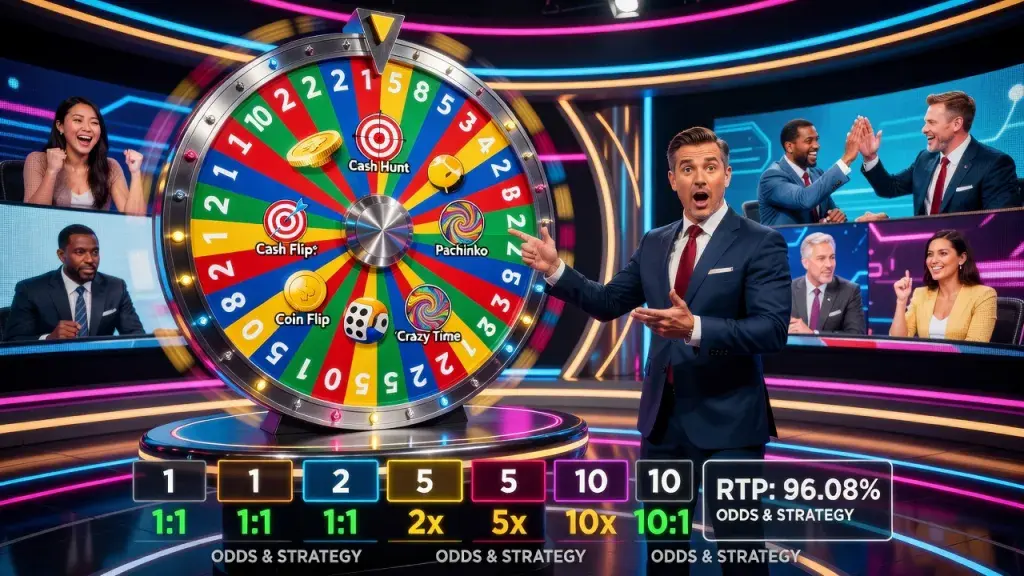
Crazy Time is a live dealer game built around a large physical wheel divided into 54 segments. It was developed as an evolution of earlier money-wheel formats, adding four distinct bonus games that transform simple number betting into a hybrid between a game show and a casino table. A live host spins the wheel in real time while players around the world place bets remotely, watching the outcome unfold on stream rather than through a random number generator alone.
The Wheel Segments Explained
The 54 segments break down into number bets and bonus bets. The numbers are 1, 2, 5, and 10, and they occupy the majority of the wheel. The remaining segments are reserved for the four bonus games: Coin Flip, Cash Hunt, Pachinko, and Crazy Time itself. Each bonus segment triggers a separate mini-game with its own mechanics and payout structure, which is what gives the format its unpredictable rhythm compared to a flat, single-outcome wheel.
How It Differs From Traditional Roulette or Money Wheels
Traditional money wheels pay based on a fixed multiplier tied to a number, full stop. Crazy Time adds a second layer: land on a bonus segment, and the payout is no longer fixed - it's determined by a live-action mini-game that can multiply your stake dramatically or leave it modest. This unpredictability is central to the appeal, but it also means the game's odds are more complex to calculate than a simple wheel.
- 54 total segments, four of which trigger bonus rounds
- Number bets (1, 2, 5, 10) make up the bulk of the wheel
- Bonus games introduce variable, uncapped-feeling multipliers
- Outcomes are decided live, not by an algorithm alone
How to Play Crazy Time: Step-by-Step Basics
Learning how to play Crazy Time starts with understanding the betting panel, which is simpler than the wheel itself might suggest. You're not required to bet on every segment - you choose which numbers or bonus games you want action on, and you can combine multiple bets in a single round.
Placing Your First Bet
Before each spin, a betting window opens, typically lasting several seconds. During this window, players select chip values and click on the numbers or bonus segments they want to back. You can spread a bet across all four numbers, focus entirely on one, or commit your stake to a bonus round. Once the timer runs out, betting locks and the host spins the wheel.
Understanding the Betting Panel Layout
The panel mirrors the wheel's composition: four number boxes and four bonus game boxes. Each box displays the current payout multiplier for that segment, which stays fixed for numbers but can escalate for bonus rounds depending on the mini-game's internal mechanics. Reading this panel correctly before locking in a bet is the first practical skill any new player needs.
What Happens After the Spin
If the wheel lands on a number you backed, you're paid according to that number's multiplier - a bet on 10 that lands correctly pays 10 to 1, for instance. If it lands on a bonus segment you backed, the mini-game begins, and your payout depends entirely on how that round plays out.
Crazy Time Game Rules in Detail
The core Crazy Time game rules are straightforward on the surface, but the bonus rounds each carry their own internal logic that's worth understanding before you stake money on them.
Number Bets and Fixed Payouts
Betting on 1 pays 1 to 1, on 2 pays 2 to 1, on 5 pays 5 to 1, and on 10 pays 10 to 1. These are static, predictable, and form the backbone of most players' sessions because they carry lower variance than bonus bets.
Coin Flip, Cash Hunt, Pachinko, and Crazy Time Bonus Rounds
Coin Flip is the simplest bonus: a two-sided coin awards one multiplier per side, and the host flips it to reveal your payout. Cash Hunt lets players symbolically pick one of many hidden multipliers displayed on a grid. Pachinko drops a puck through a pegged board to land on a multiplier slot, with an added chance of the puck striking a "double" segment that increases values across the board. Crazy Time, the flagship bonus, places the host inside a large three-flapper wheel where each flapper corresponds to a color, and a top slot doubles or triples whatever multiplier is eventually landed on.
Table Limits and Session Structure
Most versions of the game allow a wide range of stake sizes, from very small bets to substantial ones, which makes it accessible whether you're testing the format or playing with a larger bankroll. Sessions run continuously, spin after spin, with no natural stopping point built into the game itself - which is why self-imposed limits matter more here than in slower table games.
Crazy Time Strategy: What Actually Works
No betting pattern changes the underlying probability of where the wheel lands. That said, a sound Crazy Time strategy isn't about beating the math - it's about managing exposure and structuring bets in a way that aligns with your risk tolerance.
Balancing Number Bets vs. Bonus Bets
Number bets offer more frequent, smaller wins. Bonus bets are rarer but carry the potential for outsized multipliers. A common approach is splitting a stake across multiple numbers to stay active in most rounds, while allocating a smaller portion to a bonus segment for occasional high-variance upside.
Bankroll Management Techniques
Because rounds move quickly, it's easy to place far more bets per hour than in a traditional table game. Setting a fixed session budget and a stop-loss threshold before you start playing prevents the pace of the game from dictating your spending. Flat betting - wagering the same amount each round rather than chasing losses with bigger stakes - tends to preserve bankroll longevity better than progressive betting systems.
Common Mistakes Players Make
- Chasing losses by increasing bet size after a cold streak
- Overloading bonus segments hoping for a repeat of a big multiplier
- Ignoring the betting window timer and missing entries
- Treating short-term results as evidence of a pattern in the wheel
Crazy Time RTP and Odds: The Real Numbers
Understanding Crazy Time RTP and odds is where players separate realistic expectations from wishful thinking. Return-to-player figures vary by bet type, and the differences matter more than they might first appear.
RTP by Bet Type
Number bets generally carry a higher theoretical RTP than bonus bets, since their payout structure is fixed and predictable. Bonus round bets - particularly the Crazy Time segment itself - tend to have a lower baseline RTP because of the added variance from the top-slot multiplier mechanic, even though their ceiling for a single win is much higher.
Why Variance Matters More Than Average Returns
A game's RTP describes long-run behavior across an enormous number of spins - it says nothing about what happens in a single session. Bonus segments with lower RTP but higher variance can still produce a life-changing single result, while consistently betting numbers with a marginally better RTP will typically produce smoother, less dramatic swings over time.
House Edge in Context
Compared to many other live casino formats, Crazy Time's house edge sits in a fairly typical range for wheel-based games, though it fluctuates by bet type. Knowing which segments carry a tighter edge lets you decide whether you're optimizing for steady, smaller returns or accepting a worse average outcome in exchange for bonus round excitement.
How to Win in Crazy Time: Realistic Expectations
Figuring out how to win in Crazy Time consistently isn't really the right framing - no strategy overcomes the built-in house edge over a long enough timeline. The more useful question is how to maximize enjoyment and minimize unnecessary losses while giving yourself a fair shot at the game's bigger payouts.
Reading the Game's Rhythm Without Overreading It
Long droughts between bonus round appearances happen, and they don't signal that a bonus is "due." Each spin is an independent event. Recognizing this prevents the common trap of doubling down on a bonus bet purely because it hasn't appeared in several rounds.
Timing Your Sessions
Playing when you can give the game full attention matters more than any external timing theory. Because the betting window is short, distracted play leads to missed bets or rushed decisions - practical issues that hurt your results more than any perceived pattern in the wheel.
Setting Win Goals, Not Just Loss Limits
Just as a stop-loss protects your bankroll, a win goal protects your profits. Deciding in advance that you'll walk away after reaching a specific target keeps a lucky bonus round result from being gradually given back over subsequent spins.
Frequently Asked Questions
Is Crazy Time based on skill or entirely on luck?
The outcome of each spin is entirely luck-based, since the wheel and bonus mechanics aren't influenced by player input. Skill comes into play only in bet selection, bankroll management, and knowing which bet types match your risk tolerance.
Which bet type gives the best chance of a frequent win?
The number 1 segment appears most often on the wheel, making it the bet most likely to hit on any given spin, though its payout is also the smallest at 1 to 1. Betting on multiple numbers simultaneously increases the frequency of small wins across a session.
Can I play Crazy Time for free before betting real money?
Many platforms offer demo or practice modes that let you watch the wheel and bonus rounds without staking real funds, which is a practical way to learn the pacing and interface before committing a bankroll.
Why did my bonus round payout end up lower than expected?
Bonus round payouts depend on where a puck lands, which coin side flips, or which multiplier is revealed in Cash Hunt - all of which are independent of your stake size. A smaller-than-hoped multiplier simply reflects the randomness built into that specific mini-game, not an error or a fixed outcome.
How often does the Crazy Time bonus segment actually appear?
It appears on a small number of the 54 wheel segments, so it shows up considerably less often than the number bets. Its rarity is part of why it carries some of the highest potential multipliers in the game.
Is there an optimal amount to bet per round?
There's no universal optimal stake - it should be a small enough fraction of your total session budget that a run of losing spins doesn't deplete your funds prematurely. Many experienced players stake between one and three percent of their session bankroll per round to stay in the game longer.